

Choosing the right time to move a child to an English-medium school is a decision many parents carefully consider. A change in language, teaching style and curriculum can influence a child’s confidence and academic adjustment. For families exploring a CBSE school, understanding the right transition stage can make the move smoother.
The ideal age depends on several factors, including language exposure, emotional readiness, previous schooling experience and the child’s ability to adapt to a new environment.
This blog explains:
- How age influences language learning and school adjustment
- When children usually adapt better to an English-medium CBSE environment
- How parents can prepare children before making the transition
Why the Age of School Admission Matters More Than Most Parents Think
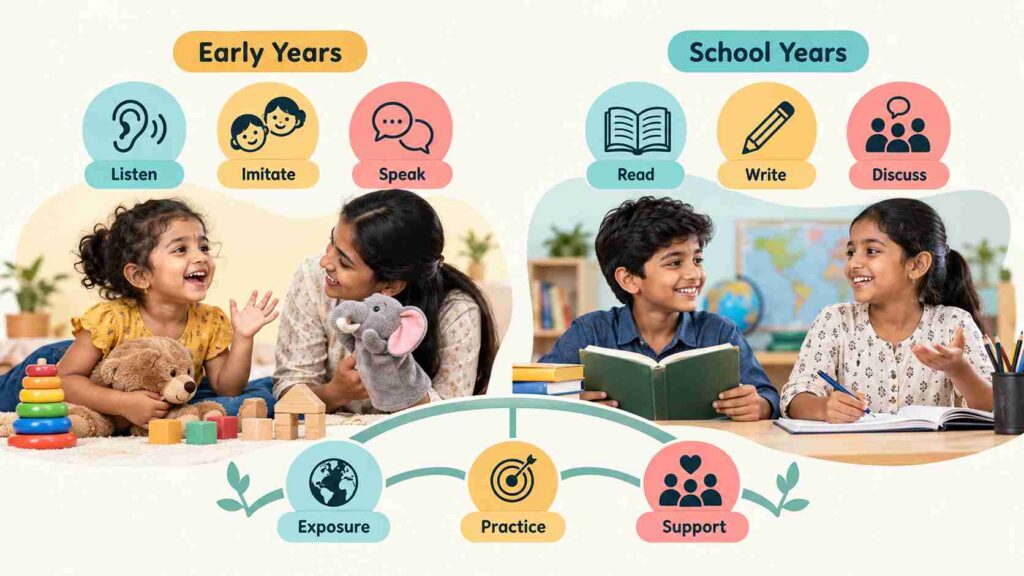
Age influences how easily children develop language skills, learning habits and classroom confidence. Younger children often absorb a new language naturally through interaction, while older students may need more structured support to bridge academic and language gaps.
However, age is not the only factor. A supportive school environment, patient teachers and regular practice can help children adjust successfully at different stages.
How a Child’s Brain Processes Language at Different Ages?
Young children often learn languages through listening, imitation and regular exposure. During the early years, they usually pick up pronunciation, vocabulary and everyday communication naturally through classroom conversations and activities.
As children grow older, language learning becomes more closely tied to academic understanding. They need to understand textbooks, write answers, follow instructions and participate in discussions. This is why a planned transition becomes important for older students.
What Child Language Development Research Says About Bilingual Learning?
Research on child language development and bilingual learning shows that children can successfully learn multiple languages when they receive regular exposure and meaningful opportunities to use each language.
Being familiar with one language does not prevent a child from learning another. In fact, bilingual learning can support communication skills, flexibility in thinking and cultural awareness when the learning environment is encouraging. The key is not avoiding a language change but ensuring the child receives enough time and support to adapt.
The Ideal Age Window: What Experts and Educators Agree On
While every child develops differently, certain age groups generally find language transitions easier because of their learning flexibility and adaptability in the classroom.
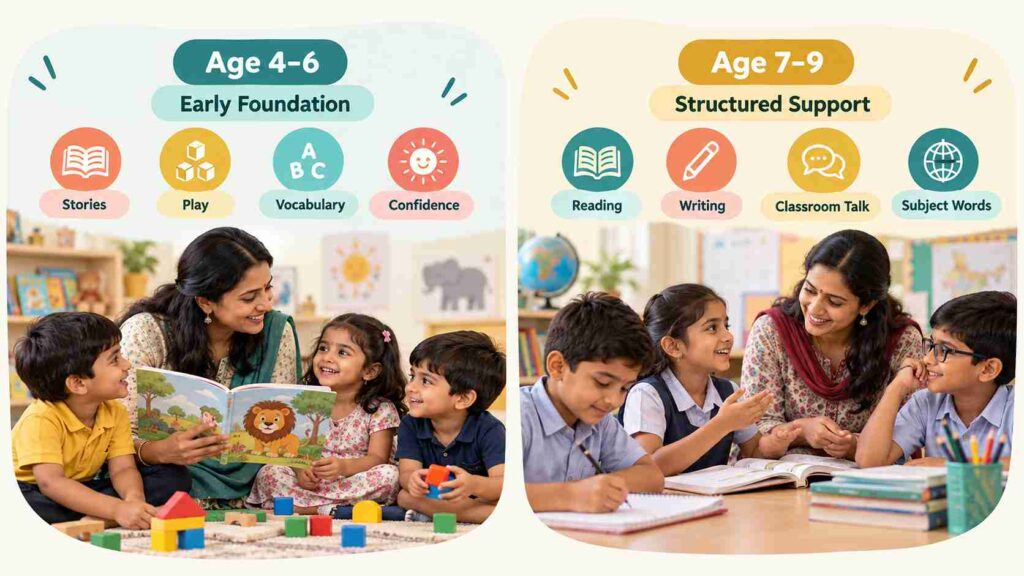
Age 4–6 — The Golden Window for English Medium Entry
The early years are often considered a comfortable time to join an English-medium school. Children at this age are still developing basic communication habits and usually learn through stories, activities, games and interaction.
A child entering at this stage gets more time to build vocabulary, classroom confidence and familiarity with English before academic demands increase.
For parents searching for the best age to join an English-medium school, the early years often provide a smoother foundation.
Age 7–9 — Still Comfortable, Needs Structured Support
Children between 7 and 9 can also adapt well, especially with regular encouragement and practice.
At this stage, the focus should be on improving:
- Reading confidence
- Basic writing skills
- Classroom communication
- Understanding subject-related vocabulary
Teachers play an important role by helping students participate without feeling pressured.
CBSE Admission Age Criteria: What Kolkata Schools Actually Follow
CBSE admission age criteria generally follow age requirements set by schools based on class level and applicable regulations. Parents should always confirm the exact age requirement with the individual school before applying.
Beyond age eligibility, schools may also consider previous academic records, readiness level, and available support systems during admission.
Is It Too Late If Your Child Is Already in Class 7 or Above?
A later transition is possible, but it requires more planning. Older students may need to adjust not only to a new language but also to different textbooks, answer-writing styles and assessment patterns. The transition should focus on building confidence rather than expecting immediate perfection.
The Real Challenges of a Late Bengali Medium to English Medium Switch
A Bengali medium to English medium switch can bring challenges such as:
- Understanding subject terminology
- Writing longer answers in English
- Following classroom discussions
- Adjusting to English textbooks
However, students can manage these challenges with gradual practice, reading habits, and teacher support.
Bengali and Hindi Medium to English Medium Switch — How the Challenges Differ
Both a Bengali medium to English medium switch and a Hindi medium to English medium switch require language adjustment. The difficulty level depends less on the previous language and more on the child’s exposure to English.
A child who regularly reads, listens and communicates in English may adjust faster, regardless of their previous medium.
What Happens When a Child Switches in Class 8, 9, or 10?
Switching during higher classes requires careful consideration because academic concepts become more advanced. Students may need additional support with:
- Subject vocabulary
- Answer writing
- Examination patterns
- Time management
A well-planned transition with academic guidance can still work, but parents should evaluate whether the child is emotionally and academically ready.
Signs Your Child Is Ready to Switch — Regardless of Age
The right transition depends on readiness, not only age.
Academic Readiness vs Emotional Readiness: Knowing the Difference
A child may understand basic subjects but still feel uncomfortable speaking in a new language. Another child may communicate confidently but still need academic support.
Parents should look for signs such as:
- Interest in learning new words
- Willingness to ask questions
- Ability to follow basic instructions
- Confidence in trying new activities
- Emotional comfort with change
Red Flags that Suggest Waiting One More Year Before Switching
The right time to change school may need reconsideration if a child is already struggling with basic concepts, experiencing high anxiety or finding it difficult to adjust socially.
Waiting a little longer can sometimes create a better transition experience.
What Parents Can Do at Home Before Admission?
A child does not need to become fluent overnight before entering an English-medium school. Small daily habits can make the transition easier.
A 4-week Preparation Plan Before Joining an English-medium CBSE School
Before admission, parents can encourage:
Week 1: Listening practice through stories, conversations and educational videos
Week 2: Reading simple English books and learning common vocabulary
Week 3: Practising basic conversations and sentence formation
Week 4: Encouraging independent speaking and confidence-building activities
How to Prepare Your Child for English Medium Without Private Tutors?
Preparing a child for English medium doesn’t always require expensive coaching.
Simple steps can help:
- Read together every day
- Encourage children to describe daily activities in English
- Watch age-appropriate educational content
- Appreciate effort instead of correcting every mistake
- Create a comfortable environment for speaking
Confidence grows when children can learn without fear.
Choosing the Right CBSE School for Your Child’s Age and Stage
The school environment matters as much as the curriculum. A child transitioning into English-medium education needs teachers who understand different learning backgrounds.
What to Look for in a School that Supports Late Switchers
Parents should consider:
- Support for students from different language backgrounds
- Experienced teachers
- Individual attention
- Balanced academic approach
- Encouragement beyond textbooks
A good school focuses on helping students adapt rather than comparing them with others.
Class 5 and Class 6 Admissions — the Sweet Spot for a Smooth Transition
For many students, Class 5 and Class 6 can be a comfortable transition stage. Children are still adaptable, while academic expectations are not as intense as higher secondary classes.
Families considering a Class 5 admission to a CBSE school should check language support, teaching methods and how the school helps new students settle in.
Parents looking for a CBSE school in Kolkata should evaluate not only the board but also the school’s approach towards each child’s learning journey.
Ready to Make the Move? Here’s Your Next Step
Moving your child to an English-medium CBSE school is a decision that should be based on readiness, support and long-term academic goals.
At Bodhi Bhavans, we create a learning environment where students can gradually build confidence, strengthen concepts, and participate actively in classroom experiences. Our approach supports children as they adapt to new academic expectations while encouraging curiosity, communication and overall development.
For parents planning admission to an English medium school in Kolkata, exploring the school environment, teaching approach, and student support system can help them make the right choice for their child’s future.
Commonly Asked Questions by People
What is the ideal age for a child to join an English medium CBSE school?
The early years, usually between 4 and 6, can provide a smoother transition because children naturally absorb language through interaction. However, older children can also adapt with proper support.
Can a child who has studied in Bengali or Hindi medium till Class 7 cope in an English medium CBSE school?
Yes. Your child may need additional support with language, textbooks and answer writing, but a structured transition plan and regular practice can help.
Does CBSE have an age limit for admission in schools?
CBSE provides broad guidelines, but individual schools follow applicable age requirements for each class. Parents should confirm the criteria directly with the school.
Is Class 9 too late to switch from Bengali or Hindi medium to an English medium CBSE school?
It is possible, but the transition requires careful planning because subjects become more advanced. Academic support and the child’s readiness are important factors.
What is the difference between early and late English medium school admission in terms of academic performance?
Early admission usually gives children more time to develop language confidence. Late admission can also be successful when children receive consistent support, practice and encouragement.