A 95% score looks great on paper. But can your child handle failure, pressure, or real-world challenges?
Today, education is no longer just about academic excellence—it’s about building confidence, resilience, and emotional strength.
Bodhi Bhavan, a CBSE school in Kolkata, understands this shift and is actively integrating SEL into its curriculum.
Let’s take a closer look at how social-emotional learning empowers students to handle stress better and build strong communication and decision-making skills.
What is Social-Emotional Learning (SEL) in CBSE Schools?
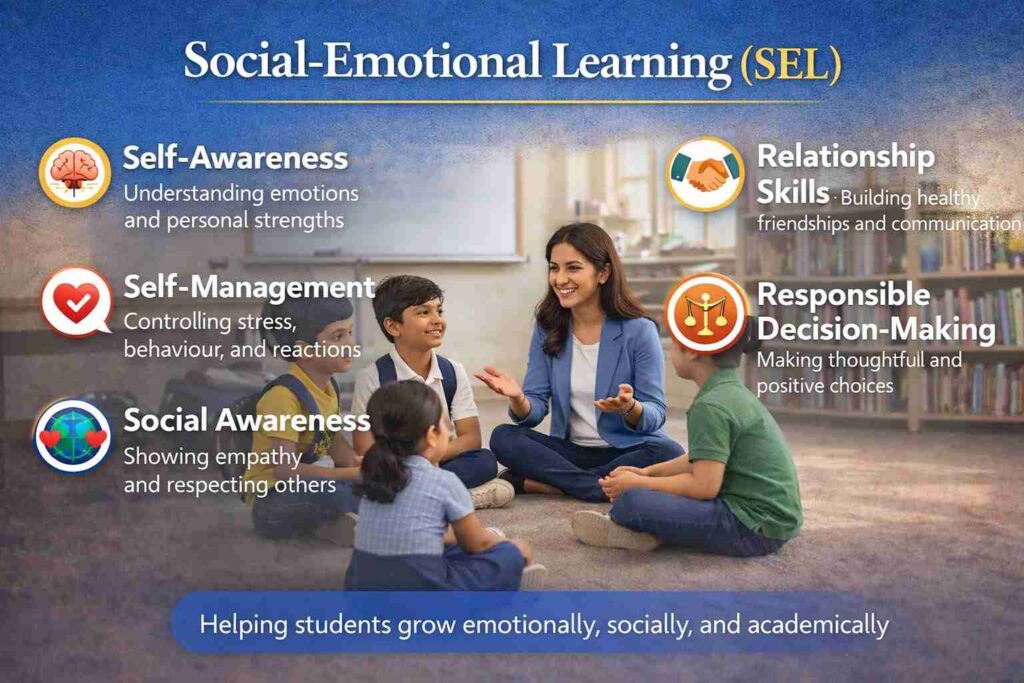
Social-Emotional Learning (SEL) in CBSE schools is a structured approach aligned with the NEP (National Education Policy) 2020, focusing on building empathy, self-awareness, resilience, and responsible decision-making to support a child’s development and mental well-being.
Core Components of SEL in CBSE Education
CBSE focuses on five areas:
- Self-awareness
- Self-management
- Social awareness
- Relationship skills
- Responsible decision-making
How CBSE Integrates Life Skills into Daily Learning
Through life skills education in the CBSE curriculum, students learn:
- Problem-solving through group activities
- Communication through presentations
- Leadership through collaborative tasks
Why Modern Education is Moving Beyond Academics
The traditional “study hard, score high” approach is slowly fading. Today’s world demands more—adaptability, communication, and emotional intelligence.
That’s why Bodhi Bhavans, a CBSE school in Kolkata, focuses on holistic development in redesigning its approach to education.
The Shift Towards Holistic Development in CBSE Curriculum
CBSE has introduced structured frameworks that go beyond textbooks. The curriculum now includes:
- Life skills training
- Value education
- Activity-based learning
This shift ensures students grow not just academically but also emotionally and socially.
Why Emotional Intelligence Matters in Today’s Students
A child who understands emotions performs better in life, not just in exams. The importance of emotional intelligence in education lies in helping students manage feelings, build relationships, and make better decisions.
- Handle peer pressure
- Manage stress and anxiety
- Build meaningful relationships
How CBSE Schools Promote Mental Well-being in Students
Most CBSE schools ensure student mental well-being by combining access to qualified counsellors, teacher training on wellness, and the integration of social-emotional learning (SEL) within the curriculum.
Role of Teachers in Emotional Development
Teachers today act as mentors, not just instructors. They:
- Encourage open conversations
- Identify emotional struggles early
- Provide guidance beyond academics
Student Mental Health Programs in Schools in India
Many CBSE institutions now offer:
- Counselling sessions
- Stress management workshops
- Peer support initiatives
This is how CBSE promotes students’ mental well-being in a structured and consistent way.
Benefits of SEL (social-emotional learning) for students
Social-Emotional Learning (SEL) improves academic performance, mental well-being, empathy, and behaviour by helping students manage stress, build relationships, and make responsible decisions.
Here is a detailed explanation of the benefits:
| Benefit Area | What It Means for Students | Impact on Growth & Development |
| Academic Achievement | Improves focus, engagement, and attitude towards learning | Better grades, higher test scores, improved attendance, and consistent assignment completion |
| Mental Health & Well-being | Helps students manage stress, anxiety, and emotional challenges | Builds self-esteem, resilience, and overall emotional stability |
| Behavioral Development | Encourages self-control and positive behaviour patterns | Reduces aggression, bullying, and disruptive classroom behaviour |
| Social Skills & Relationships | Develops empathy, communication, and conflict resolution skills | Stronger relationships with peers, teachers, and family members |
| Self-Awareness & Self-Management | Helps students understand emotions and regulate responses | Better stress management, goal setting, and emotional control |
| Decision-Making Skills | Encourages thoughtful and responsible choices | Improves problem-solving ability and accountability |
| Long-Term Life Success | Prepares students for real-world challenges beyond school | Builds leadership, adaptability, and workplace readiness |
Why Do Parents Prefer CBSE Education for Holistic Development?
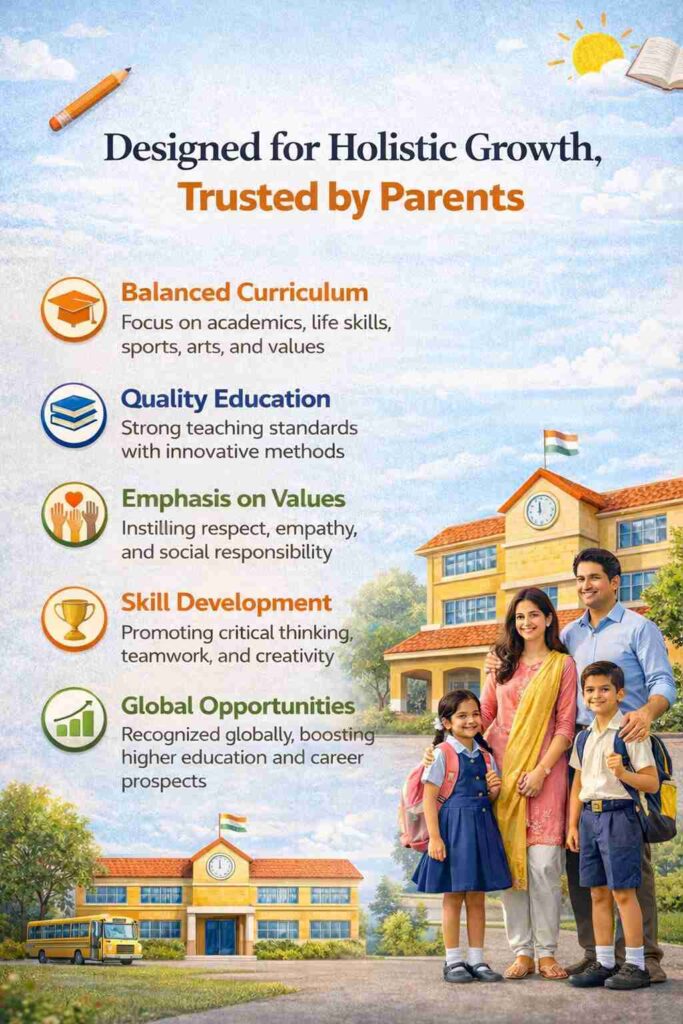
Parents in Kolkata prefer CBSE schools for holistic development because they offer a nationally recognised curriculum, strong extracurricular opportunities, and a focus on conceptual learning. Their student-friendly approach also prepares children for competitive exams like NEET and JEE.
Reasons for Choosing CBSE in Kolkata
- Standardised Curriculum
CBSE offers a nationally recognised curriculum, ensuring consistency in education across schools. It also makes transitions easier for students moving between cities. - Preparation for Competitive Exams (NEET, JEE)
The CBSE syllabus is closely aligned with major entrance exams like NEET and JEE. This gives students a strong foundation and reduces the need for separate preparation. - Holistic Growth (Academics + Co-curricular)
CBSE schools focus on overall development through academics, sports, arts, and activities. This helps students build confidence, creativity, and life skills. - Conceptual Learning over Rote
The curriculum emphasises understanding concepts rather than memorisation. This improves problem-solving skills and long-term knowledge retention. - Modern Pedagogical Techniques
CBSE schools use interactive teaching methods like smart classes, group discussions, and practical learning. This keeps students engaged and improves learning outcomes. - Affordability
CBSE schools offer quality education at relatively affordable fees compared to many international boards. This makes good education accessible to a wider group of families.
Important Factors to Consider While Choosing a School
| Factor | What to Look For | Why It Matters |
| SEL & Life Skills Integration | Schools that include social-emotional learning (SEL) in daily teaching | Shows how CBSE promotes mental well-being in students by helping them manage stress, build confidence, and develop life skills |
| Student-Centric Teaching Methods | Interactive classes, discussions, and activity-based learning | Reduces academic pressure and supports mental well-being while improving understanding |
| School Environment & Support Systems | Safe campus, counselling support, and approachable teachers | Reflects how CBSE promotes mental well-being in students through a supportive and stress-free environment |
| Academic Balance | Focus on both studies and emotional development | Ensures students grow academically without compromising mental health |
| Location & Daily Routine | School within a reasonable distance | Helps maintain a stress-free routine, supporting overall well-being |
Preparing Students for Tomorrow’s Challenges
Education today is evolving beyond academics to focus on overall student growth. This blog explains how Social-Emotional Learning (SEL) helps students build confidence, manage stress, and develop essential life skills. It also highlights how schools support mental well-being and guides parents in choosing the right learning environment for their child.
Take the first step towards your child’s future—connect with Bodhi Bhavans, a leading CBSE school in Kolkata, for admissions. Call +91 9830062937 for enquiries.
People Also Ask
What are the 5 C’s of social emotional learning?
The 5 C’s of Social-Emotional Learning (SEL) are Competence, Confidence, Connection, Character, and Caring. These elements help students develop essential life skills, build strong relationships, and grow into responsible individuals.
Why is SEL important for students?
It improves mental health, academic performance, and overall personality development. Students learn to manage stress, make better decisions, and adapt to real-life challenges.
How can educators incorporate social-emotional learning (SEL) into their curriculum?
Educators integrate SEL through group activities, discussions, and real-life tasks. Supportive classrooms use check-ins, open expression, and reflection exercises regularly.
What are the three R’s of social-emotional learning?
The three R’s of social-emotional learning are Regulation, Reconstruction, and Resilience. They focus on managing emotions, reshaping negative thoughts, and building the ability to cope with challenges.
What is an example of social-emotional learning in the classroom?
An example of social-emotional learning in the classroom is group activities where students collaborate to solve problems and share ideas respectfully. This helps them build communication, empathy, and teamwork skills while learning to manage emotions in real situations.