

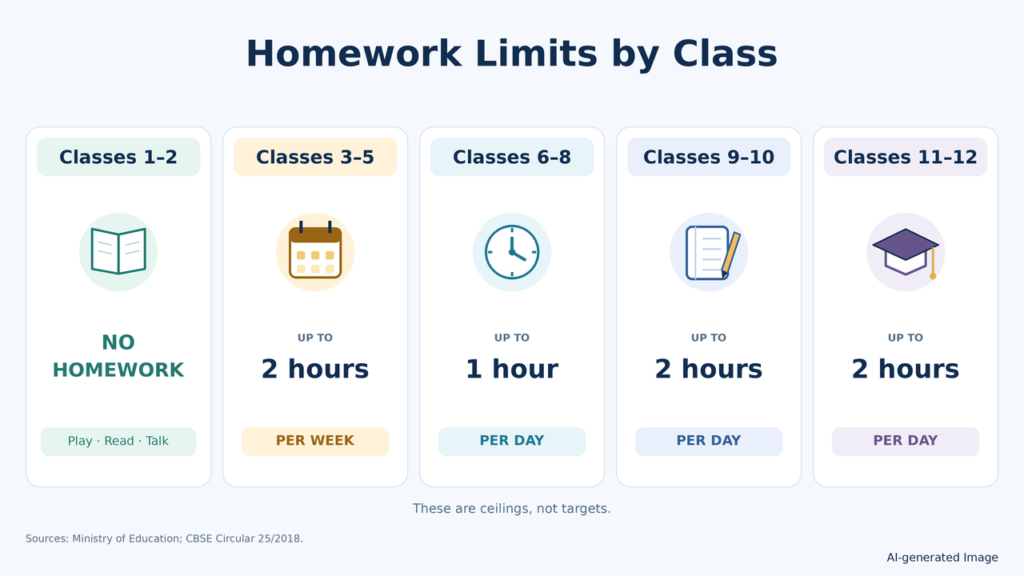
Homework becomes too much when it regularly cuts into a child’s sleep, play or family time. If you are wondering how much homework is too much, start with these daily needs. The Ministry of Education’s School Bag Policy 2020 recommends lighter workloads for younger children, with limits by class.
Parents cannot always tell whether long evenings reflect heavy workloads or a topic needing support. In this blog, we’ll cover homework expectations at each school stage, signs of work overload, and ways to manage stress.
How Much Homework is Too Much for a Child?
Homework is too much when it repeatedly leaves a child exhausted, upset or without free time. To judge how much homework is too much, check three things:
- Is homework pushing bedtime later?
- Does your child cry or avoid assignments?
- Is there no time left for play or family?
A school homework limit by age gives a starting point. We also consider where children get stuck. The class-wise guidance below helps put their working time in context.
What Is the CBSE Homework Policy for Each Age Group?
Parents researching the CBSE homework policy should consult the Ministry of Education’s School Bag Policy 2020 (Source). Often searched as the CBSE school bag policy, this national document sets class-wise ceilings. Schools’ daily arrangements vary, so ask for their written policy.
Homework for Class 1 and 2 CBSE
No homework should be assigned in Classes 1–2. CBSE Circular 25/2018 (Source) reiterates this, covering homework for Class 1 CBSE and Class 2. We suggest relaxed play, reading aloud and everyday conversations at home. These activities should remain enjoyable, without compulsory worksheets.
Class 3 to 5: Light Practice for Core Skills
The recommended maximum is two hours a week across subjects. We suggest brief reading activities, simple projects or revision linked to classroom learning. Retelling a story or describing a family meal can help children connect lessons with everyday experiences.
Class 6 to 8: Building Study Habits
The recommended maximum is one hour a day. We encourage children to check their school diary, estimate task times and tick off completed work. This builds planning skills and helps them manage deadlines with less prompting from parents.
Class 9 and 10: Study Routine for Class 10 CBSE
The homework ceiling is two hours a day across subjects. A Class 10 CBSE study routine must also account for revision and board preparation. We suggest 25–30-minute study blocks with short breaks. Use revision time for a weak topic or board-style questions, and adjust the plan around school, travel, and coaching.
Class 11 and 12: Balancing Boards, NEET/JEE and Rest
The same two-hour daily homework ceiling applies to Classes 11–12. Parents often ask, “How many hours should a child study?” We consider coaching, assignments and independent revision together. Senior students may study longer, but a packed NEET/JEE coaching day should prompt adjustments elsewhere. Agree on priorities and a finishing time that protects sleep.
What Are the Signs of Too Much Homework?
The signs of too much homework may appear in health, mood or habits:
- Headaches or tiredness: your child often looks drained during evening work.
- Mood changes: small tasks regularly trigger tears or anger.
- Falling grades despite effort: longer sessions bring little progress.
- Lost interest in hobbies: favourite activities keep getting dropped.
These can indicate homework stress in children, but may have other causes. We recommend speaking to the teacher if the pattern continues. Persistent physical symptoms also deserve medical advice.
What Does a Healthy Daily Routine Look Like for Each Age?
A healthy routine gives homework a defined place while protecting daily activity and age-appropriate sleep.
| Approximate age/class | Homework ceiling | Play or activity | Sleep per 24 hours |
| 6–7 / Classes 1–2 | None | Daily active play | 9–12 hours |
| 8–10 / Classes 3–5 | 2 hours weekly | Outdoor games | 9–12 hours |
| 11–13 / Classes 6–8 | 1 hour daily | Sport or cycling | 9–12 hours at 11–12; 8–10 at 13 |
| 14–15 / Classes 9–10 | 2 hours daily | A chosen activity | 8–10 hours |
| 16–18 / Classes 11–12 | 2 hours daily | Walks or sport | 8–10 hours |
How Can Parents Reduce Homework Stress?
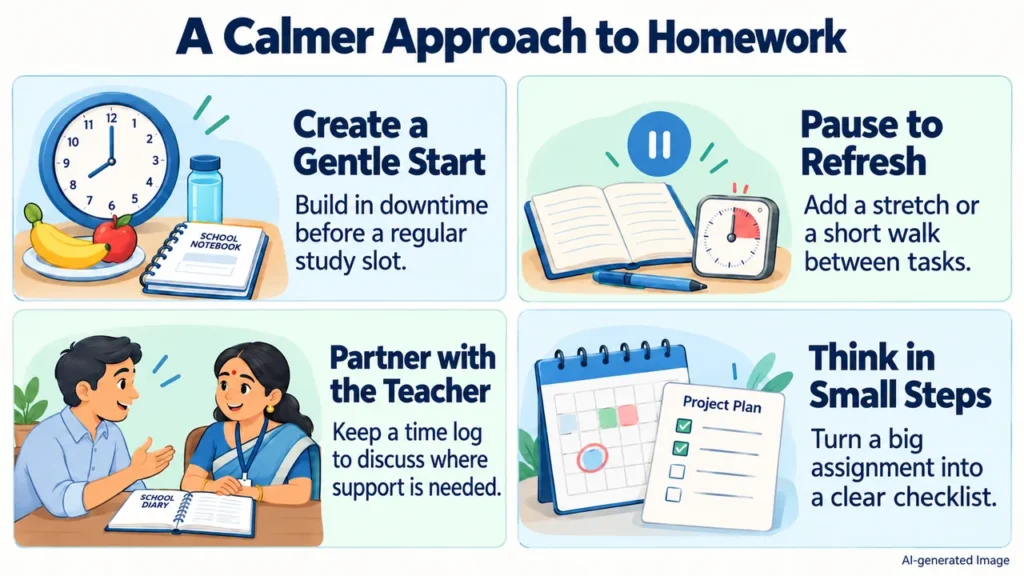
To reduce homework load, separate the amount assigned from the time spent struggling. We suggest:
- Fix one slot: allow a snack and rest after school.
- Take breaks: step away between focused sessions.
- Talk to the teacher: share a week’s timings and ask about priorities or support.
- Teach planning: list deadlines and divide projects into smaller steps.
Repeated difficulty with one concept may need guided practice. Doing the work for children hides that difficulty.
What to Ask a CBSE School About Homework
Ask how homework is planned, checked and adjusted. We recommend five questions:
- What is your policy for each class? Ask about expected completion times.
- What happens at weekends? Check whether unfinished classwork adds to assignments.
- How do you support children who need more time? Ask about remedial teaching.
- How are projects assigned? Clarify deadlines and children’s independent responsibilities.
- How do subject teachers coordinate? Ask how overlapping deadlines are managed.
A sample week’s homework diary can make the answers easier to assess.
Always Keep in Mind Balance Beats Burden
A manageable routine helps children practise and return to lessons ready to learn. When choosing a CBSE school in Kolkata, look for clear expectations and open conversations about workload.
We welcome your questions at Bodhi Bhavans. You can call us or directly visit our campus to speak with our team and share your concerns
Frequently Asked Questions
How much homework is too much for a child?
Homework is excessive when it regularly disrupts sleep, play, meals or family time, or causes distress. Record actual working time and compare it with class-wise guidance. Difficulty with one subject may call for teaching support.
Is there homework in Class 1 and 2 under CBSE?
No. CBSE Circular 25/2018 says homework should not be assigned in Classes 1–2. Shared reading, conversation and play can support learning without becoming compulsory tasks. Parents can ask the class teacher to clarify expectations.
How many hours should a Class 10 CBSE student study daily?
There is no single daily study total for everyone. National guidance recommends up to two hours of assigned homework. Plan revision around learning needs, school and coaching, while protecting time for meals, activity and sleep.
How can parents tell if homework is stressing their child out?
Look for repeated tears, avoidance, irritability, poor sleep or physical complaints around homework. Ask what feels difficult and record timings. Discuss continuing concerns with the teacher; ongoing health symptoms should also be assessed by a doctor.
How can parents choose a CBSE school in Kolkata with a balanced homework policy?
Ask for the written class-wise policy, a sample homework week and details of teacher coordination. Check support for children who take longer and arrangements for overlapping deadlines. Clear answers help parents judge whether the routine suits their child.